
Discover how a refined horse head improves responsiveness, softness, and communication—plus what conformation says about trainability.
We’ve all heard it: “You don’t ride the head.”
Except… yeah. You actually do. In fact, some riders are practically riding the entire face, neck, and half the horse’s shoulder with their whole upper body.
I’m not saying looks are everything, but when I’m evaluating a horse—whether for breeding or training—I absolutely study the head. Not just because I want a pretty one at the end of my lead rope (though, let’s be honest, I do). The structure of the head directly affects responsiveness, trainability, and how much effort you’ll need to put in.
Let’s break this down with two of my own horses so I don’t ruffle any feathers on the internet.
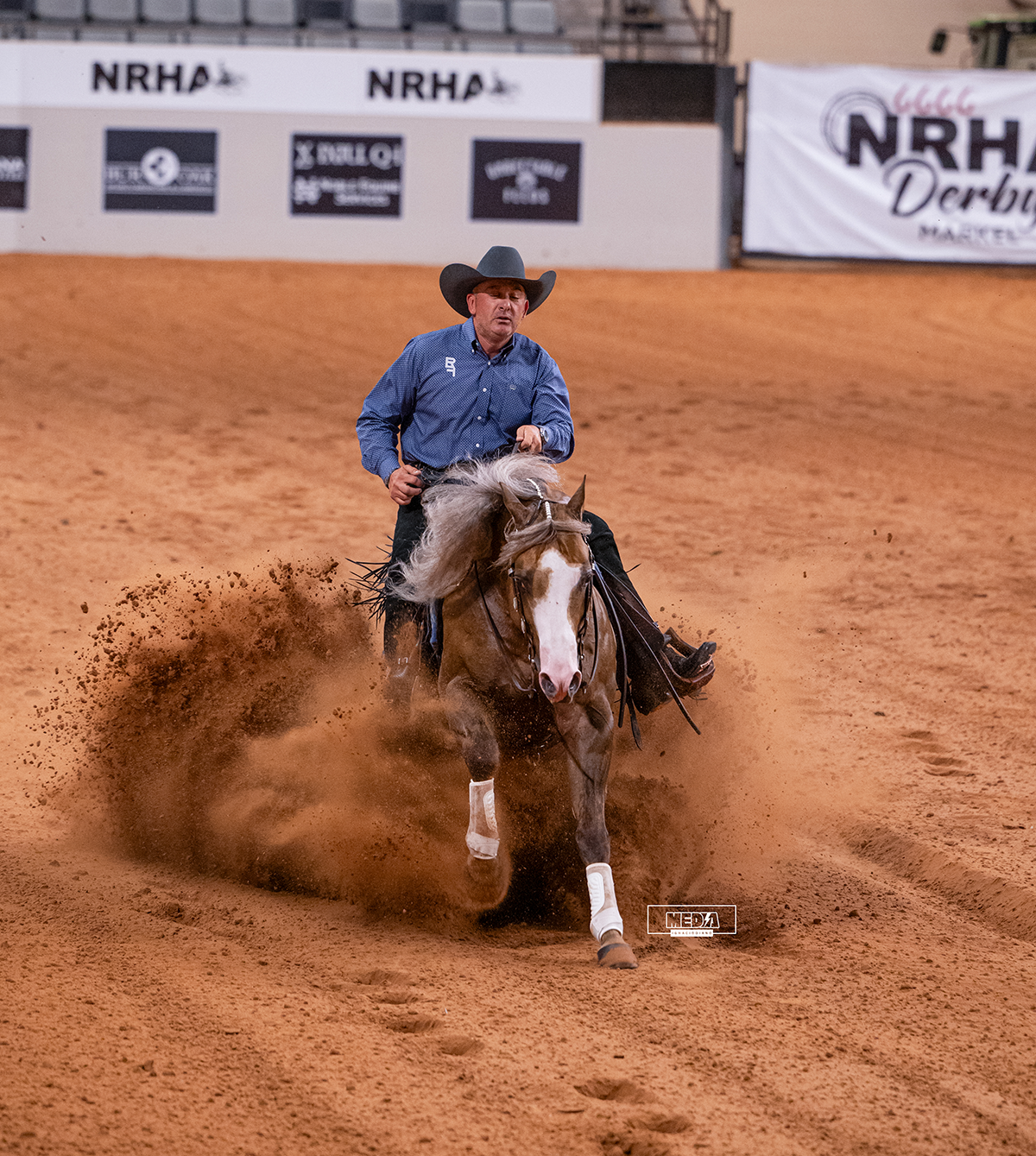
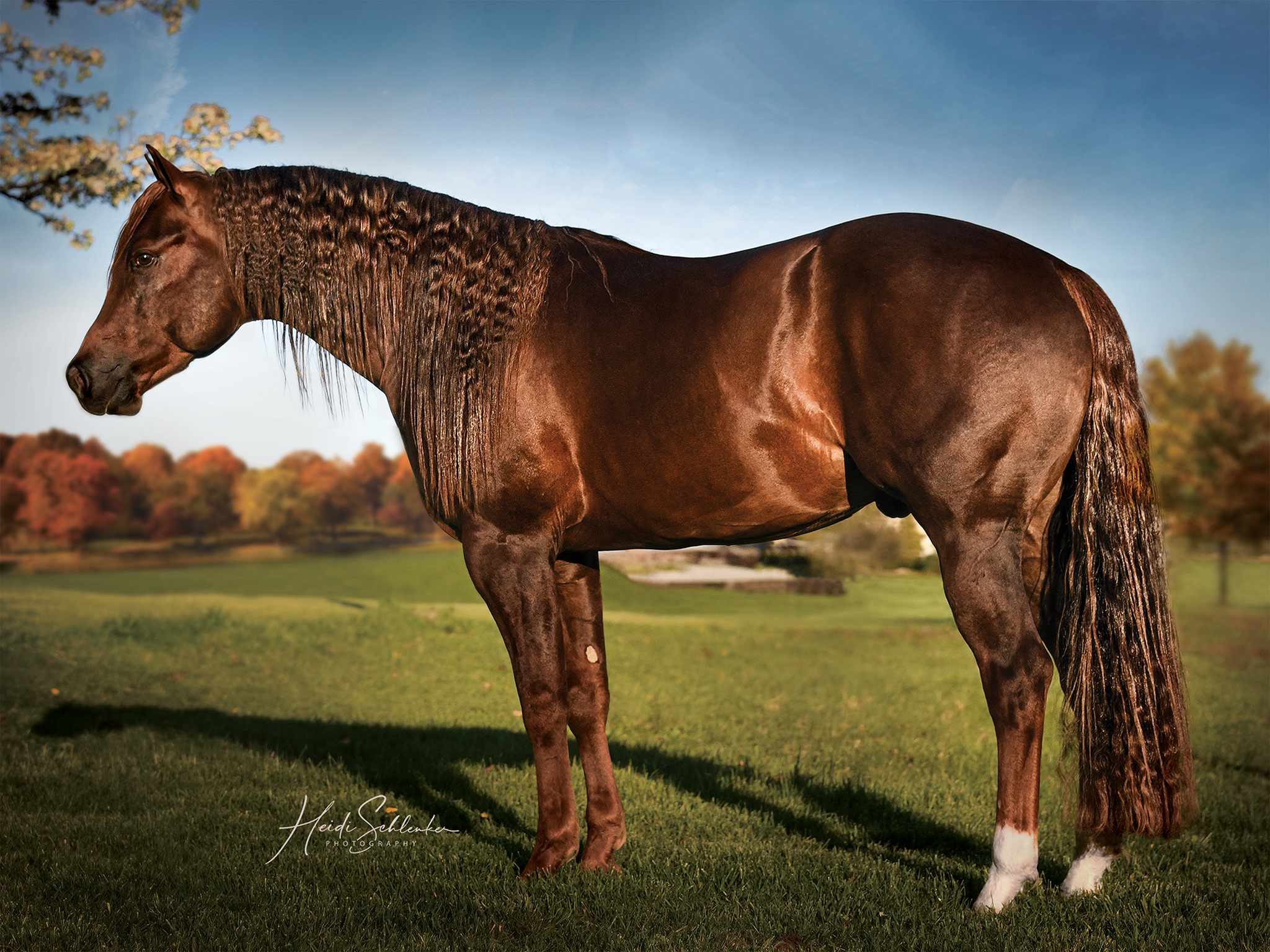
Volturi exhibits many traits of a refined head that enable him to respond quickly and with minimal effort on the rider’s part.
He’s got the full package—not just in the “pretty-boy” sense, but in the “dang, he’s easy to ride” sense. He’s light, soft, and responsive. Vertical flexion? Automatic. Frame? Natural. Collection? Maintained with minimal input.
This refined horse head reads the reins like they’re Braille. That’s how I like them.
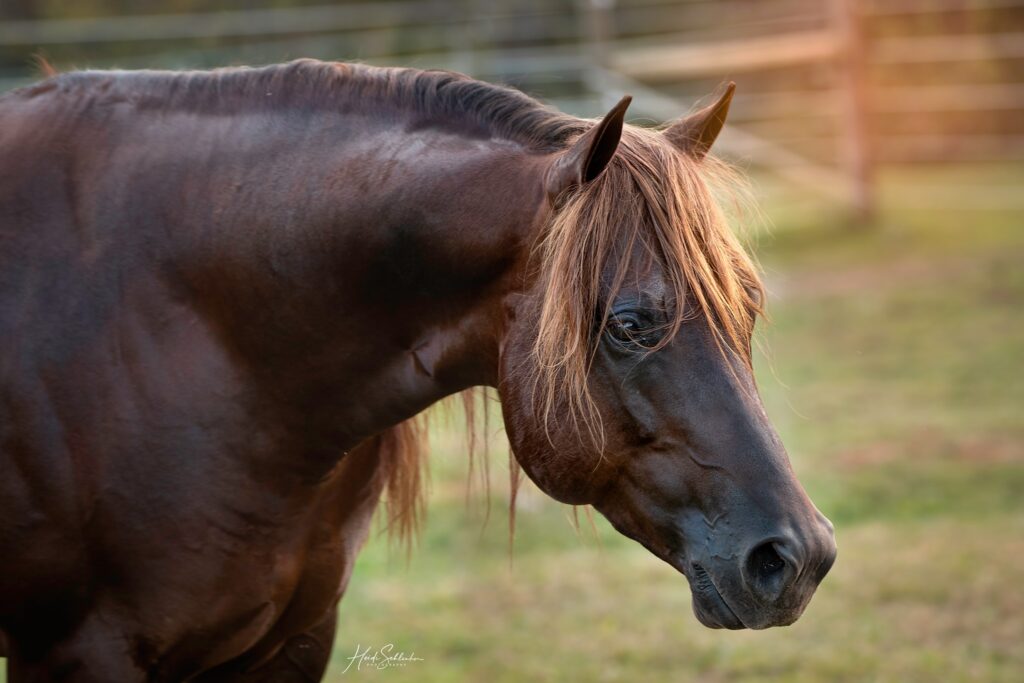
Pretty Rowdie Chic exhibits many traits I look for conformationally, but she also has a few traits I don’t care for. She’s still gorgeous and produces extremely nice foals, but we need to realize she’s a bit coarser through the head than Volturi.
She’s highly trainable, but in terms of softness in the bridle? Compared to Volturi, she needs more pressure. Her reaction time is slower. Think of the difference between texting with a touchscreen vs. using a rotary phone. You’ll get there… it just won’t be as smooth.
Here’s the kicker: Even a horse with a coarse head can achieve remarkable softness in the bridle. It just takes longer and requires a bit more finesse from the rider.
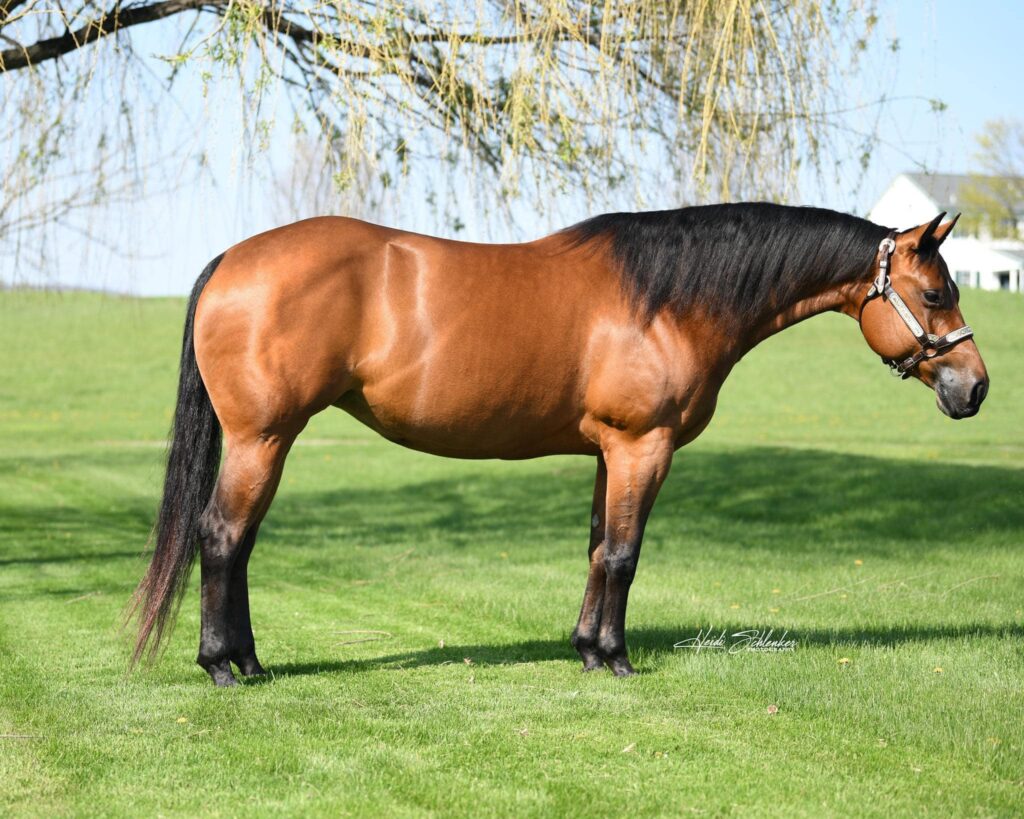
The horse’s head and muzzle are packed with sensory nerves that detect pressure, movement, and contact from the reins:
This is why horses can feel a fly land on their lip—and why a slight rein cue should suffice with a refined horse head.
The refined features aren’t just aesthetic. Here’s what they offer:
And for me? I want that signal clean, clear, and quick.
Refined horse heads mean responsive rides. Coarse heads mean conversations that need subtitles and repeated cues.
And while a coarser-headed horse can still achieve great softness, it’s usually established over time versus an innate tendency to be immediately soft in the bridle or halter.
Related Quarternicks reports: see how your horse’s conformation grades against its discipline with the Conformation Analysis.
Not every cross is built the same.
Quarternicks analyzes your mare beyond the surface to identify stallions that align with her structure, pedigree, and long-term performance potential.