10 Truths about Bone Building That Matter More Than Bone-Tendon Circumference
By
Heidi
“Bone-tendon circumference might make a horse look strong, but real durability comes from density, remodeling, and smart conditioning—not just thick limbs and flashy photos. Here’s what builds bone that lasts.”
“He’s got good bone.” Translation: “His legs look like fence posts.” Reality? That does not mean anything for long-term durability.
Bone-tendon circumference (BTC) is the girth measurement taken just below the knee or hock, capturing the cannon bone and surrounding soft tissues. It is often used to estimate limb substance, but it is a misleading metric when it comes to soundness. Bone building for horses is not about circumference. It is about remodeling, resistance, and reality. Here is what actually builds lasting soundness.
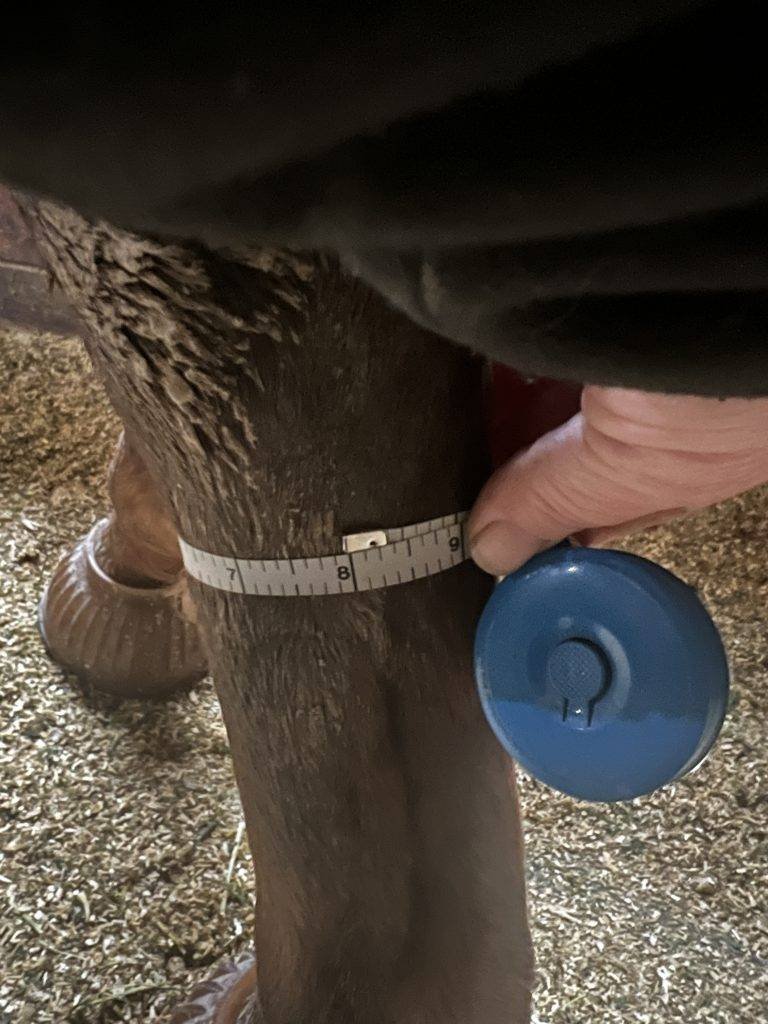
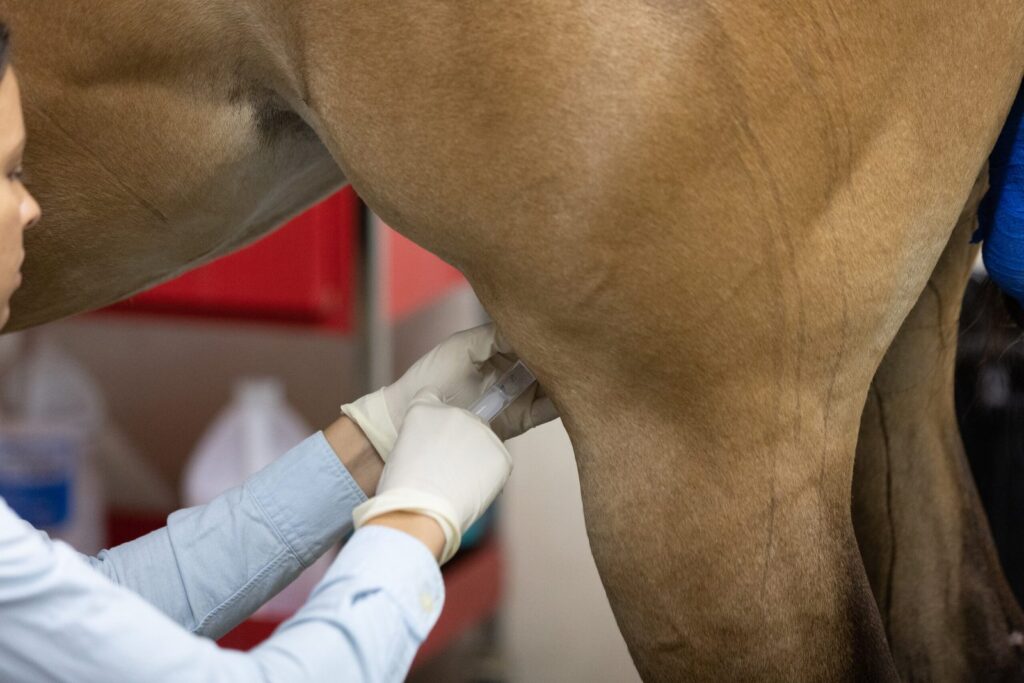
Bone-tendon circumference on Volturi. Bone-tendon circumference is measured just below the knee with a soft measuring tape.
What Bone-Tendon Circumference Can Indicate:
A large cannon bone
Developed tendons and ligaments
Visual symmetry in the limbs
But Here’s What It Doesn’t Prove:
Bone mineral density (BMD)
Cortical thickness
How that limb remodels under stress
Resistance to injury over time
BTC is like judging a pipe by its diameter—without knowing if it’s solid steel or hollow PVC.
“Bone circumference alone is not predictive of strength unless paired with mineral density and mechanical loading history.” — Greve et al., 2014
“Bone thickens into the 5th year, but real strength only comes with stress-induced remodeling.” — Bennett, n.d.; Lawrence, 2005
Arena Work ≠ Bone Remodeling
Jogging and loping on soft, fluffy arena footing 6 days a week? That’s cardio—not cortical bone development.
Ride for 20–60 minutes then stall them for 23 hours? You’re not building durability—you’re undoing progress.
Bone is a use-it-or-lose-it tissue, even in mature horses. Research shows stall rest for 10–14 days reduces bone density—starting in the trabecular bone and eventually impacting the cortical layers (Firth, 2006; Logan & Nielsen, 2021).
Walking or standing around doesn’t cut it. The strain required to stimulate remodeling is ~1000 microstrain—a level you only reach through impact work like trotting, galloping, or breezing on firm ground.
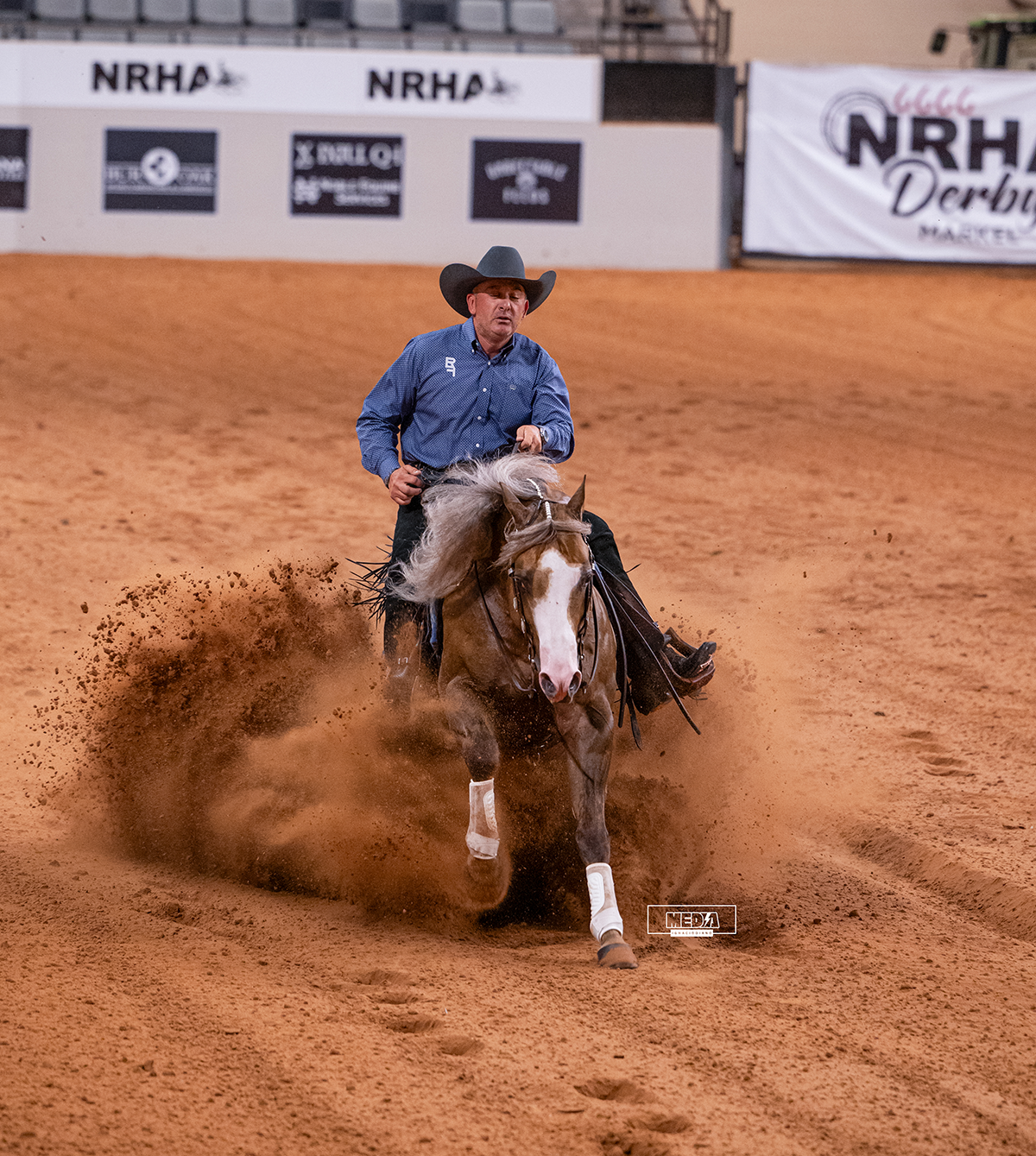
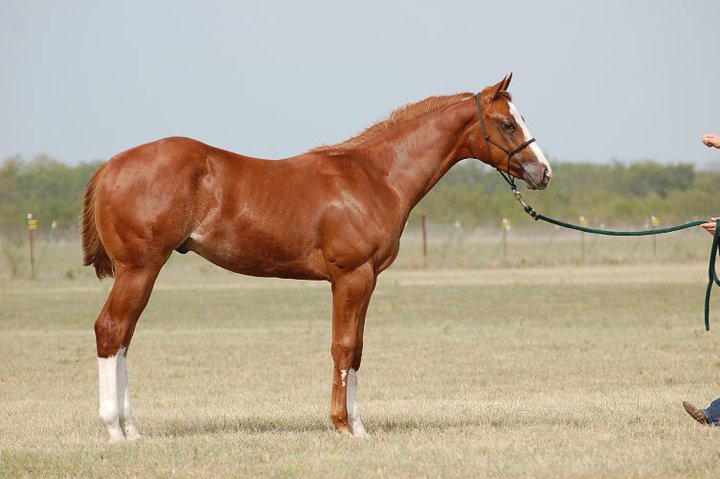
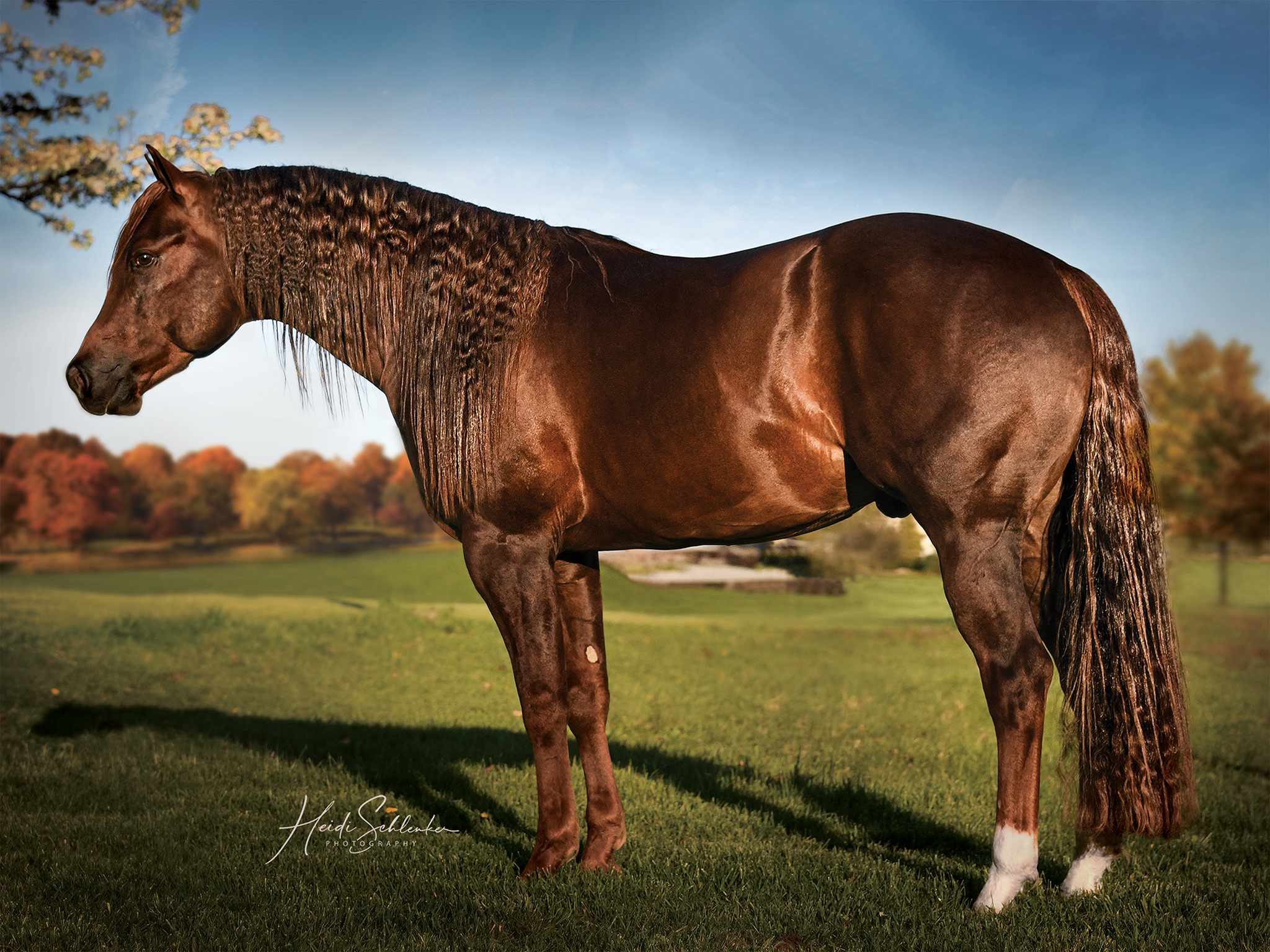
FG Totally A Charmer as a weanling. He was pretty light of bone as a weanling. From 6 months on he was worked 6 days per week with interval training over varying terrain, and turned out every single day afterward. You can absolutely keep them fit outside and still go win the world.
Want Durable Bone? Do This Instead:
Sprint, long-trot, gallop, lope, and jog—in straight lines
Work over firm terrain (grass, hard dirt, manure track—not deep sand)
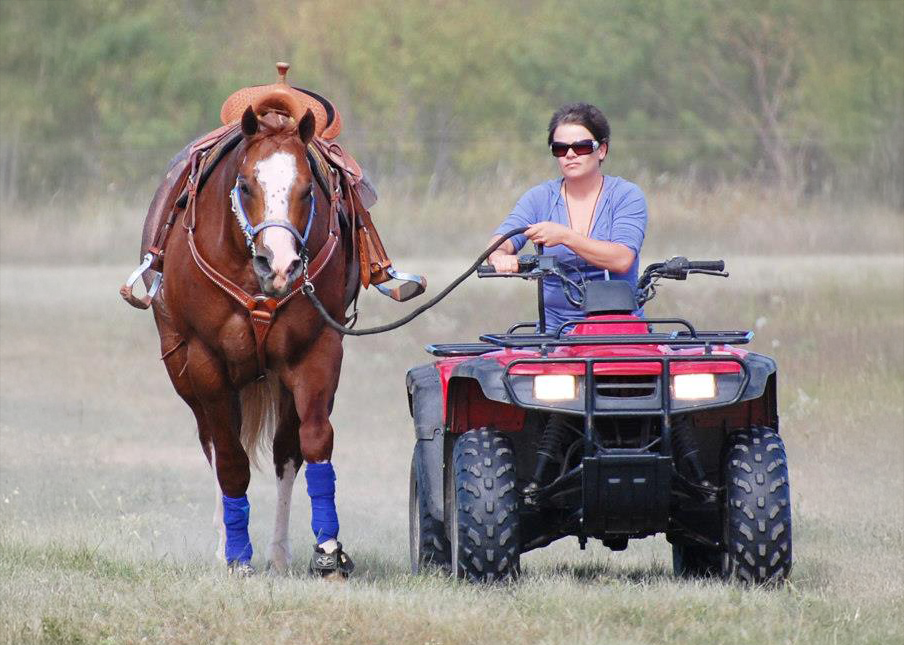
Incorporate resistance (pony off a Gator, pull a tire)
Use intervals: work + rest = adaptation
Start early, progress gradually
Know that bone takes ~120 days to remodel
“Bone grows wide through age 5, but if there’s no stress, there’s no structure.”
~ Dr. Deb Bennett
Ponying from a vehicle, or another horse, across various terrain at interval speeds, helps to remodel bone and build bone density.
“Real remodeling only happens with high-impact, cyclic loading—not cushy, repetitive movement.”
~ Firth, 2006.
The Equine P90X Program: Real Conditioning for Show Horses
This is for stock horses headed to the pen—halter, ranch, pleasure, cow horse. Not race prep. Here’s a sample:
No longeing. No circles. No deep footing. Yes to: straight lines. Resistance. Intervals. Recovery.
“Lunging in deep sand doesn’t build bone—it builds vet bills.”
Raub et al. (1989) found that yearlings trotted on firm ground developed 25% more bone mineral content than stalled horses.
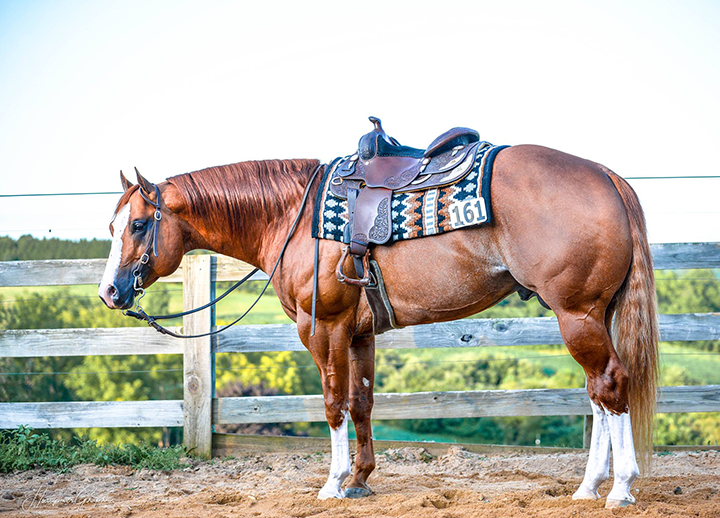
FG Totally A Charmer at 8 years old. He lived on the side of a mountain with a 17° slope to his pasture for over 5 years and was fit on and turned out daily. He amassed over 10 inches of bone tendon circumference as an aged horse. A far cry from the fine boned weanling I came home with.
Fitting Myths That Cost You Soundness
Hot walkers, euro-cisers, and circles on circles? That’s fluff. Not fitness. You end up with fat, glossy yearlings—but no cardiovascular foundation or remodeled bone.
You paid for a pretty package of BS. Horses in pastures run straight, jump logs, and self-load their limbs. That’s the natural blueprint for durability.
Fewer circles = fewer injuries
Fewer injections = more soundness
More sprinting = more bone
Repeated Joint Injections = Accelerated Breakdown
In performance barns, it’s routine:
“Inject the hocks.”
“Stifle’s due.”
“Keep him going until Finals.”
Let’s get real: Corticosteroids make them feel sound—but the damage continues underneath.
What They Actually Do:
Reduce cartilage quality
Thin joint surfaces
Weaken subchondral bone
Suppress pain while degeneration builds
(Massey et al., 2011; Firth, 2006)
Then Add 23 Hours of Stall Time Per Day:
No natural loading
No remodeling
No synovial stimulation
Result: Early breakdown. Chronic lameness. Premature retirement. Ask my rotator cuff—same issue, different species.
Routine joint injections used as maintenance or as “preventative” medicine are doing your horse more harm than good.
The Smarter Plan:
Inject only when truly needed—not on schedule
Use pasture rest—if you’ve got the patience
Condition them before problems appear
Train with terrain, intervals, progressive stress
Focus on adaptation—not pain management
Nutrition Supports Bone—Strain Builds It
2:1 calcium-to-phosphorus ratio
Trace minerals: copper, zinc, manganese
Forage-first, low-sugar feed
B12 + protein after workouts
You can’t fix bad fitting with a mineral tub.
Final Takeaway: Circumference vs. Strength
You can breed it. You can feed it. You can wrap it in neoprene and bathe it in IceTight.
But if you’re not loading it, you’re not building it.
Durable horses aren’t made in fancy stalls. They’re built in motion—with time, terrain, tensile stress, and science.
You’re not preventing anything with injections—you’re just fast-tracking breakdown to meet a deadline.
Raub, R. H., Jackson, S. G., & Baker, J. P. (1989). Effects of exercise on bone growth and development in weanling horses. Journal of Animal Science, 67(2), 506–514. https://doi.org/10.2527/jas1989.672506x
Greve, L., Dyson, S. J., & Pfau, T. (2014). The interrelationship of lameness, saddle slip and back shape in the general sports horse population. Equine Veterinary Journal, 46(6), 687–694. https://doi.org/10.1111/evj.12222
Bennett, D. (n.d.).The Ranger Piece. Equine Studies Institute. No DOI available.
Lawrence, L. M. (2005). Effects of exercise and training on skeletal development in horses. Proceedings of the Kentucky Equine Research Conference. No DOI available.
Massey, P. D., et al. (2011). Intra-articular corticosteroids: a review of use and misuse in performance horses. AAEP Proceedings. No DOI available.
Related Quarternicks reports: see how your horse’s build and soundness grade with the Conformation Analysis.
To provide the best experiences, we use technologies like cookies to store and/or access device information. Consenting to these technologies will allow us to process data such as browsing behavior or unique IDs on this site. Not consenting or withdrawing consent, may adversely affect certain features and functions.
Functional
Always active
The technical storage or access is strictly necessary for the legitimate purpose of enabling the use of a specific service explicitly requested by the subscriber or user, or for the sole purpose of carrying out the transmission of a communication over an electronic communications network.
Preferences
The technical storage or access is necessary for the legitimate purpose of storing preferences that are not requested by the subscriber or user.
Statistics
The technical storage or access that is used exclusively for statistical purposes.The technical storage or access that is used exclusively for anonymous statistical purposes. Without a subpoena, voluntary compliance on the part of your Internet Service Provider, or additional records from a third party, information stored or retrieved for this purpose alone cannot usually be used to identify you.
Marketing
The technical storage or access is required to create user profiles to send advertising, or to track the user on a website or across several websites for similar marketing purposes.