
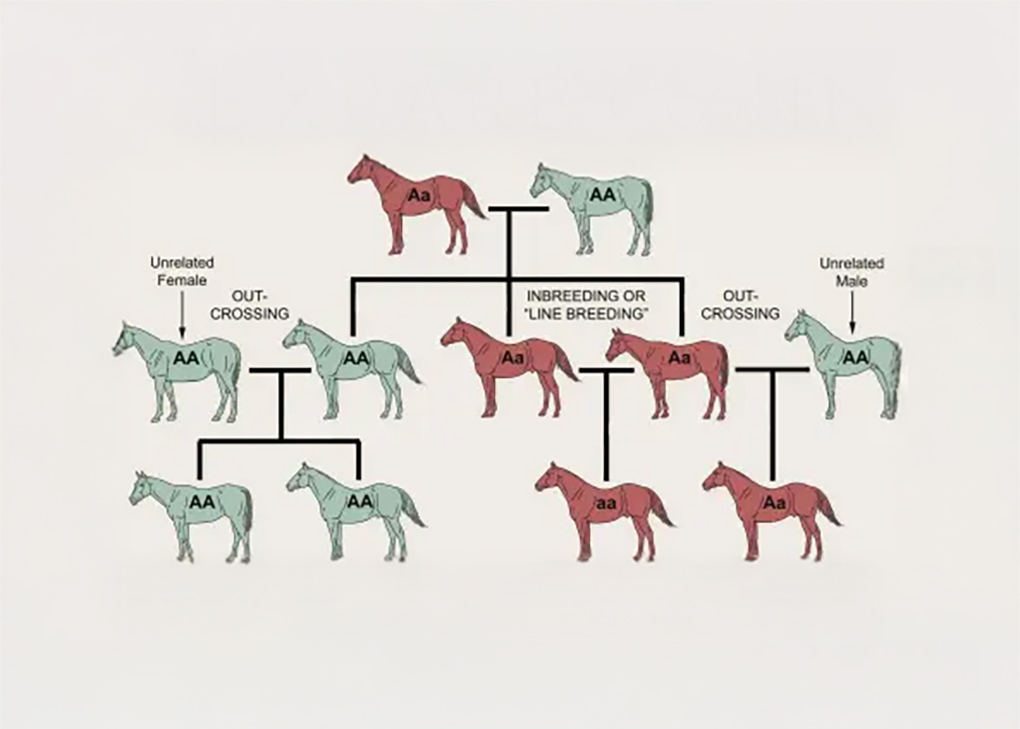
Outcrossing in horses refers to a mating where the sire and dam share no duplicated ancestors within the first five generations. It is used to introduce genetic diversity, increase vigor, and reduce the likelihood of recessive gene expression. However, outcrossing does not guarantee performance or consistency. Pedigree structure, genetic influence, and trait alignment still determine the success of a cross.
In pedigree analysis, an outcross refers to a mating in which the sire and dam do not share any duplicated ancestors within the first five generations of the pedigree.
In Thoroughbred pedigree terminology, horses described as outcrossed typically do not have any ancestors duplicated between the sire’s and dam’s sides of the pedigree within five generations. If an ancestor appears more than once on the sire’s side of the pedigree but does not appear on the dam’s side — or vice versa — the resulting foal is still considered outcrossed because the duplication does not occur across both sides of the mating.
The purpose of outcrossing is to introduce genetic diversity into a pedigree while avoiding close concentration of specific ancestors.
Outcrossing does not mean that the pedigree lacks influential ancestors. Instead, it means that those ancestors appear only once across the early generations of the mating rather than being duplicated through both parents.
Because of this structure, outcrossed pedigrees tend to contain a broader mixture of genetic influences than pedigrees built around repeated ancestors.
Breeders often use outcrossing to introduce genetic diversity into a breeding program.
One reason for doing so is to increase vigor within the resulting stock, especially when one or both parents used in the mating are strongly inbred. When animals are heavily concentrated around a small number of ancestors, genetic diversity can narrow over successive generations. Introducing an outcross can help restore balance by widening the genetic base of the pedigree.
Outcrossing also allows breeders to draw from a broader genetic pool. Instead of repeatedly concentrating a small group of ancestors, the mating introduces additional bloodlines that may contribute useful traits not present in the existing pedigree.
Another benefit of outcrossing is that it reduces the probability that a foal will inherit two copies of the same recessive gene from a shared ancestor. Because the sire and dam do not share duplicated ancestry within the first five generations, the chance of pairing identical recessive genes becomes lower.
For breeders managing genetic disorders or structural weaknesses within a population, outcrossing can, therefore, serve as a valuable tool for reducing risk.
One of the biological mechanisms often associated with outcrossing is heterosis, sometimes referred to as hybrid vigor.
Heterosis occurs when genetically diverse parents produce offspring that demonstrate improved performance in traits such as growth, fertility, health, durability, and general athletic resilience compared with the average of the parents.
This phenomenon has been observed across many animal breeding populations. When two individuals from relatively different genetic backgrounds are crossed, the resulting offspring may benefit from increased genetic variability and reduced expression of harmful recessive traits.
While heterosis does not guarantee superior performance, it helps explain why certain outcross matings occasionally produce exceptional individuals.
Although outcrossing can introduce genetic diversity and improve vigor, it also carries certain limitations.
One drawback is that outcrossed individuals are often less consistent in the traits they transmit to their offspring. Because their pedigrees contain a wider variety of genetic influences, the resulting foals may show greater variation in type, structure, temperament, and athletic ability.
For breeders attempting to consistently produce a very specific type of athlete, this variability can make results harder to predict.
Outcrossing can also make it more difficult to anticipate which crosses will work well in subsequent generations. When pedigrees contain fewer repeated ancestors, there are fewer established patterns that breeders can use to guide mating decisions.
This unpredictability is one reason why many breeding programs use outcrossing selectively rather than relying on it exclusively. However, careful pedigree analysis and conformation evaluation can reduce many of these limitations by identifying compatible bloodlines, reinforcing useful traits through deeper pedigree patterns, and ensuring the physical structure of the mating complements the genetic goals of the cross.
Many successful breeding programs alternate periods of genetic concentration with periods of outcrossing in order to take advantage of the strengths of both strategies.
Inbreeding and linebreeding can be used to reinforce the influence of particularly valuable ancestors and establish a consistent type within a breeding program. Outcrossing can then be introduced to restore genetic diversity, improve vigor, and prevent excessive concentration of undesirable traits.
One “best of both worlds” approach involves breeding an inbred parent to a mate that does not carry the duplicated ancestor but shares a different superior ancestor with the inbred individual. In this situation the resulting foal is outcrossed with respect to the first ancestor but develops a new inbreeding pattern to the second ancestor.
This approach allows breeders to reduce concentration around one ancestor while simultaneously reinforcing another desirable bloodline.
A pedigree can appear outcrossed on paper and still contain substantial reinforcement of certain ancestors deeper in the pedigree.
This happens because duplicated ancestors may occur beyond the fifth generation, or because related individuals appear through different branches of the pedigree. Even when a specific ancestor does not appear twice within the first five generations, related descendants of that ancestor may still concentrate the same genetic influence across the pedigree.
In addition, some pedigrees accumulate reinforcement through clusters of closely related horses. Full siblings, half siblings, three-quarter siblings, and other closely related individuals may appear throughout the pedigree even though the original ancestor does not appear as a visible duplication within the early generations.
When this occurs, the pedigree may technically meet the definition of an outcross while still carrying significant concentration of certain genetic families.
For this reason, evaluating whether a pedigree is truly outcrossed requires more than simply checking whether a duplicated ancestor appears within a specific number of generations. The entire pedigree structure must be examined to determine how genetic influence is distributed across the pedigree.
Outcrossing can play an important role in the Quarter Horse industry because the breed encompasses multiple performance disciplines with somewhat different genetic foundations.
Cutting, reining, cow horse, racing, roping, ranch events, and versatility competition often trace back to overlapping but distinct clusters of influential ancestors.
Introducing an outcross between these different performance populations can sometimes produce horses that combine useful traits from multiple disciplines.
However, these crosses must still be evaluated carefully. Not every outcross produces a functional athlete. Structural traits, mental attributes, and discipline-specific performance demands must still align for a mating to succeed.
Outcrossing can introduce new genetic possibilities within a pedigree, but it does not eliminate the need for careful analysis of how those genetic influences interact.
Within the QuarterNicks framework, outcrossing is evaluated as one component of broader pedigree architecture.
Rather than viewing outcrossing as inherently superior or inferior to inbreeding or linebreeding, the analysis focuses on how genetic influence is organized throughout the pedigree.
Even an apparently outcrossed mating may still reinforce important ancestors through deeper pathways, maternal families, or clusters of related descendants.
By examining these patterns alongside structural compatibility and discipline-specific performance traits, pedigree analysis moves beyond simple labels such as “inbred” or “outcrossed” and instead evaluates how the genetic architecture of a mating supports the type of horse a breeder intends to produce.
Cothran, E. G. (2017). Genetic Diversity in the American Quarter Horse: Managing Inbreeding and Outcrossing. Journal of Equine Science.
Sponenberg, D. P., & Bixby, D. E. (2019). Managing Breeds for a Secure Future: Strategies for Genetic Conservation.
Hill, E. W., Gu, J., & McGivney, B. A. (2020). Genetic Contribution of Performance and Health Traits in Modern Equine Breeding Programs. Equine Veterinary Journal.
Related Quarternicks reports: test an outcross on your own mare with the Pedigree Nicking Report, or the full linebreeding read with the Master Analysis.
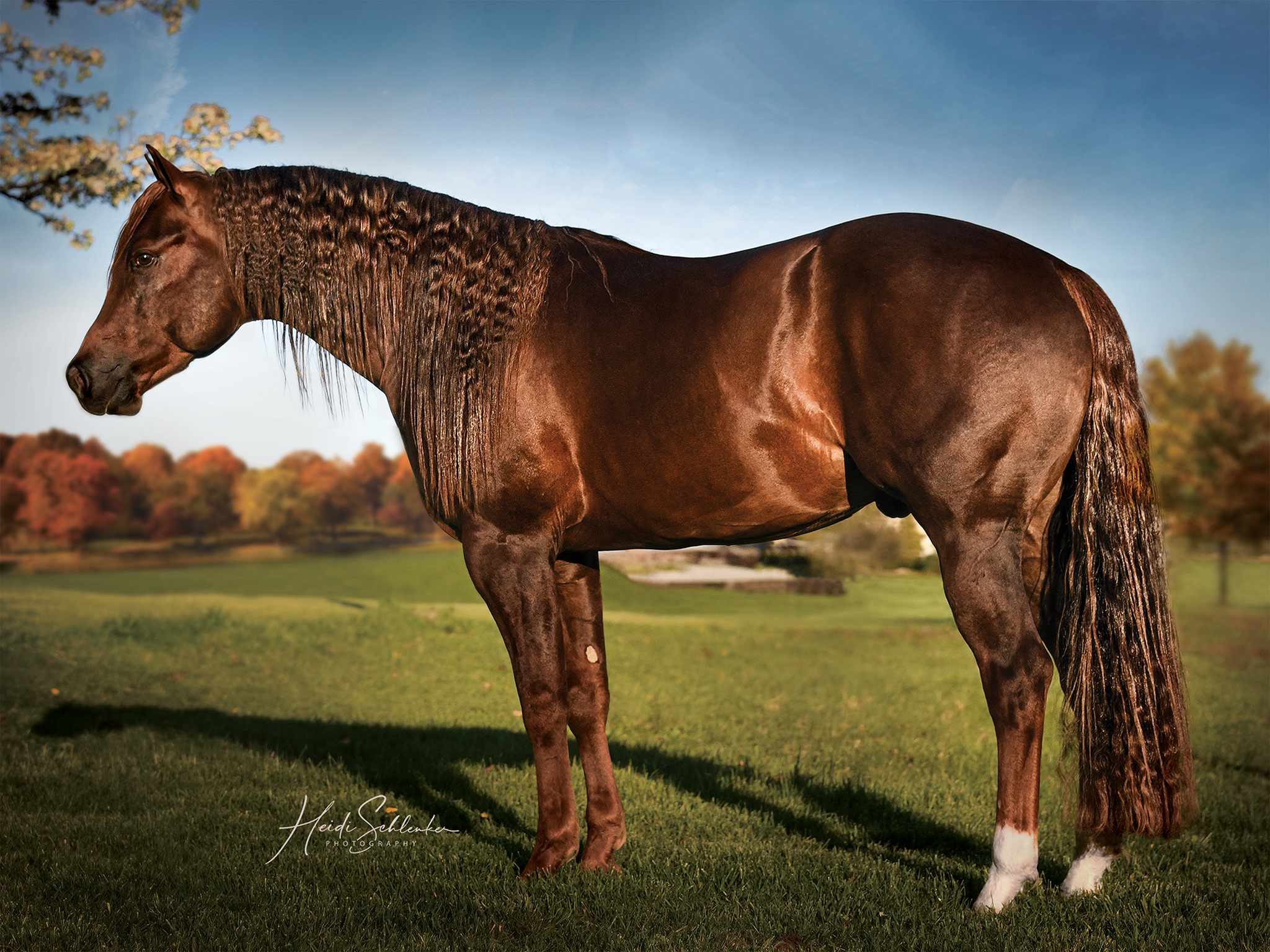
Not every cross is built the same.
Quarternicks analyzes your mare beyond the surface to identify stallions that align with her structure, pedigree, and long-term performance potential.