
Inbreeding and linebreeding in horses refer to the concentration of shared ancestry within a pedigree to reinforce genetic influence. While inbreeding focuses on closer duplications and linebreeding spreads influence across deeper generations, both strategies shape how traits are expressed, transmitted, and stabilized. Pedigree structure determines whether that concentration produces consistency or amplifies weaknesses.
In pedigree analysis, inbreeding refers to matings in which the sire and dam share common ancestors close enough in the pedigree that those ancestors exert a substantial genetic influence on the foal.
Pedigree analysts do not all define this boundary the same way. Some define inbreeding as duplications occurring within the first three generations of the pedigree. Others extend the definition to include duplications within the fourth generation.
This distinction exists because ancestors within the first four generations still contribute a measurable proportion of the foal’s genetic makeup. A second generation ancestor contributes approximately 25 percent of the genetic influence, a third generation ancestor contributes roughly 12.5 percent, and a fourth generation ancestor contributes approximately 6.25 percent.
For this reason, many pedigree analysts classify duplications occurring in the fourth generation or closer as inbreeding. Under this approach, patterns such as 2×3, 3×3, 3×4, and 4×4 are considered inbreeding because the repeated ancestor still exerts significant genetic pressure on the resulting foal.
Duplications beginning in the fifth generation and beyond are typically described as linebreeding. These duplications still reinforce ancestry, but the genetic contribution of the ancestor becomes progressively smaller with each additional generation.
QuarterNicks classifies duplications occurring within the fourth generation as inbreeding because ancestors within this range still exert significant genetic influence on the resulting foal.
The distinction between three-generation and four-generation definitions becomes particularly important when evaluating pedigree architecture and trait concentration. While a single fourth-generation duplication may appear relatively distant, multiple fourth-generation pathways to the same ancestor can still create substantial reinforcement within the pedigree.
When those pathways accumulate through different sons, daughters, and maternal families, the combined effect can exert considerable influence on the traits expressed in the foal.
For this reason, pedigree analysis does not rely solely on identifying whether a duplication occurs within a specific generation. Analysts must also evaluate how often the ancestor appears, through which branches of the pedigree the duplication occurs, and whether those repetitions build enough concentration to reinforce the traits historically associated with that individual.
In some pedigrees, several fourth-generation pathways can exert more influence than a single closer duplication.
Another factor that complicates simple duplication notation is that some pedigrees create structural reinforcement that behaves genetically closer than the generational position alone would suggest. In certain cases a 4×4 cross can function similarly to a 3×3 cross if the duplicated ancestor appears through particularly influential descendants or if the surrounding pedigree structure reinforces that ancestor through additional related lines. This is why pedigree architecture must be evaluated as a whole rather than relying solely on the generational position of a duplication.
Inbreeding can provide several advantages when applied carefully.
It can concentrate the genetic influence of a superior individual within a pedigree. When an ancestor consistently transmitted important performance or conformational traits, repeating that ancestor in the pedigree increases the likelihood that those characteristics will appear in the foal.
Inbreeding can also help establish uniformity within a breeding program. By reinforcing the same genetic source across multiple generations, breeders may produce animals that resemble one another more closely in structure, temperament, and athletic ability.
Another potential advantage is that inbred animals may transmit their own traits with greater reliability when used for breeding. Because their genetics are more concentrated, their offspring may show less variation and a stronger tendency to reproduce the same type.
The same mechanism that concentrates desirable traits can also concentrate weaknesses.
Every ancestor carries both strengths and faults. When that ancestor is repeated closely in a pedigree, the probability increases that recessive genes or structural weaknesses carried by that individual will also become expressed.
Close inbreeding also increases the risk that a foal may inherit two copies of recessive genes responsible for genetic disorders or undesirable characteristics. If those genes exist within the duplicated ancestor, concentrating that ancestor increases the likelihood that those traits will appear.
Intense inbreeding can also lead to reduced vigor in the resulting stock. Excessive genetic concentration may affect fertility, soundness, or overall physical resilience.
For this reason, most successful breeding programs do not rely on repeated close inbreeding alone. Instead, they balance periods of concentration with occasional outcrosses to maintain vitality within the population.
Thoroughbred breeding history provides several examples illustrating both the power and the risks of inbreeding.
The influential stallion Phalaris was inbred 3×4 to the stallion Springfield. This concentration helped reinforce a line known for exceptional speed and acceleration. Phalaris later became one of the most influential stallions in the history of the Thoroughbred breed.
However, descendants of this line have also demonstrated an increased tendency toward lower limb injuries when the concentration becomes excessive. This example illustrates an important principle. Inbreeding does not selectively amplify only the desirable characteristics of an ancestor. It amplifies the entire genetic package carried by that individual.
Another example involves the stallion High Time, who was inbred 3×3×2 to the stallion Domino. High Time was not a particularly successful racehorse himself, yet he later became an important sire whose daughters proved to be exceptional broodmares. This example demonstrates that inbred individuals may still become powerful transmitters of genetic influence even if their own performance record is modest.
Some breeders also emphasize inbreeding to exceptional mares. This concept is commonly known as the Rasmussen Factor. It refers to duplicating a superior female ancestor through different offspring within the pedigree, often through both sons and daughters. The goal is to reinforce the genetic influence of a broodmare who has demonstrated exceptional ability either on the track or as a producer.
Linebreeding is a breeding strategy designed to capture many of the advantages of inbreeding while reducing the risks associated with close genetic concentration.
Instead of duplicating an ancestor very close in the pedigree, linebreeding accumulates multiple crosses of important ancestors farther back, typically beginning in the fifth generation and extending through deeper generations of the pedigree.
Examples of linebreeding patterns include duplications such as 5×5, 5×6, 6×6, and other repeated appearances across the sixth, seventh, and eighth generations. Although each individual occurrence contributes a smaller genetic percentage, the combined influence of multiple pathways can still shape the overall character of the pedigree.
The goal of linebreeding is to reinforce the genetic influence of superior ancestors without concentrating those genes so tightly that undesirable traits become amplified.
By spreading these duplications across multiple generations and through several different descendants, breeders attempt to gather a wider selection of beneficial genes from the ancestor while reducing the risk of pairing undesirable recessive traits.
Many breeders evaluate inbreeding by looking only at the position of a duplicated ancestor in the pedigree. Reports often present this information as simple notation such as 3×3, 3×4, or 4×4. While this notation identifies where the ancestor appears in the pedigree, it does not explain how that ancestor functions within the genetic structure of the mating.
The position of a duplication is only one element of pedigree analysis.
A pedigree must also be evaluated for how often the ancestor appears, which descendants carry the duplication, and how those pathways interact across both sides of the pedigree.
A line represents one pathway of descent to an ancestor. Multiple lines to the same ancestor exist when that ancestor is reached through multiple independent descent pathways within the pedigree.
This concept becomes particularly important when evaluating critical mass within a pedigree. Critical mass occurs when an ancestor is represented through enough independent genetic pathways that its influence begins to dominate the background of the pedigree.
In practical pedigree analysis, this threshold is generally considered to occur when a minimum of 12.5 lines to the same ancestor appear within the first ten generations of the pedigree.
When a pedigree reaches this level of reinforcement, the ancestor’s genetic contribution is no longer limited to one or two isolated duplications. Instead, the pedigree begins to accumulate the influence of that ancestor across multiple branches simultaneously. This concentration increases the likelihood that the traits historically associated with that individual will be expressed in the resulting foal.
The structure of those pathways also matters. An ancestor appearing repeatedly through daughters can reinforce maternal traits differently than the same ancestor appearing primarily through sons. The interaction between male and female transmission pathways can influence how traits express across generations, sometimes referred to as colt and filly factors in pedigree interpretation.
Sibling relationships within the pedigree also influence how duplication patterns behave. Full siblings, half siblings, three-quarter siblings, and seven-eighth siblings may carry very similar genetic packages even though they appear as separate individuals in the pedigree. Recognizing these relationships can reveal additional layers of reinforcement that are not obvious when examining the pedigree as a simple list of names.
Because of these factors, evaluating inbreeding requires more than identifying where a duplication occurs. The analyst must examine the entire pedigree structure, identify how influential ancestors repeat across generations, determine whether those repetitions reinforce desirable traits, and evaluate whether the resulting genetic concentration aligns with the physical structure and performance goals of the mating.
Many breeders rely on pedigree tools such as inbreeding coefficients, duplication charts, and adjusted generation regression reports when evaluating potential matings.
While these tools provide useful information, they are often misunderstood and frequently interpreted in ways that oversimplify the actual structure of the pedigree.
The most commonly used measurement is the coefficient of inbreeding, often abbreviated as COI. This statistic estimates the probability that a foal will inherit two identical copies of a gene from a common ancestor. COI can be useful for identifying very close inbreeding, but it does not explain how the pedigree is structured or which ancestors are responsible for the concentration.
Two horses can have identical COI values while having completely different pedigree architectures. One pedigree may concentrate the influence of a specific ancestor through several structured pathways, while another may simply contain scattered duplications that do not reinforce any particular trait group.
Adjusted generation regression, commonly abbreviated as AGR, is a statistical method used in pedigree databases to estimate the proportional genetic contribution of specific ancestors within a pedigree. The method weights more recent generations more heavily than distant generations in order to approximate how genetic influence is distributed across the pedigree.
AGR can provide a numerical estimate of how strongly certain ancestors contribute to the overall genetic makeup of a horse. However, it does not evaluate how those ancestors are arranged within the pedigree or how their traits interact across generations.
These types of measurements provide statistical summaries of a pedigree, but they do not interpret the biological relationships inside it.
Pedigree analysis requires examining how influential ancestors repeat across generations, how those ancestors connect through specific sons and daughters, and whether the resulting structure builds reinforcement around important performance traits.
It also requires recognizing patterns that simple reports cannot detect. These include maternal transmission patterns, clusters of influential siblings, recurring crosses through particular branches of the pedigree, and the accumulation of lines that create critical mass around key ancestors.
Without examining those structural relationships, a pedigree report becomes little more than a list of names and percentages.
Effective pedigree analysis moves beyond those surface statistics. It evaluates how genetic influence is organized across the pedigree, how those influences interact with one another, and whether the resulting structure supports the type of athlete the breeder intends to produce.
When these elements are considered together, pedigree analysis becomes a method of understanding how traits are likely to be transmitted across generations rather than simply measuring how often an ancestor appears.
This type of structural analysis is the foundation of the QuarterNicks approach. Instead of relying solely on statistical summaries such as COI or AGR, QuarterNicks evaluates how influential ancestors are distributed across the pedigree, how genetic lines accumulate through multiple pathways, and whether those patterns reinforce the traits a breeder is trying to produce.
Related Quarternicks reports: put these principles to work on your own horse with the Pedigree Nicking Report, which grades a mare on five stallions by real linebreeding and earnings, or the Master Analysis for a complete pedigree, trait, and conformation read.
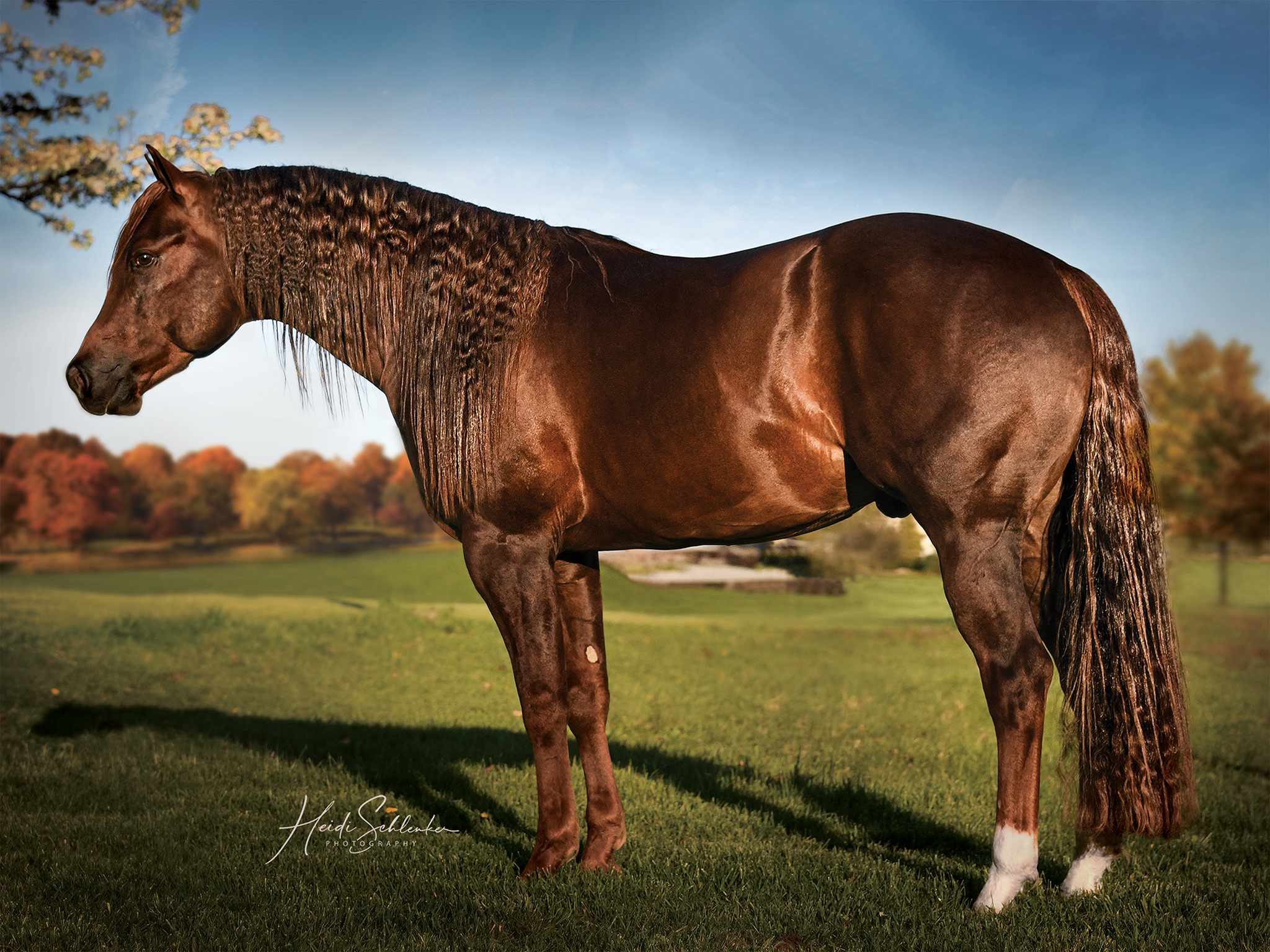
Not every cross is built the same.
Quarternicks analyzes your mare beyond the surface to identify stallions that align with her structure, pedigree, and long-term performance potential.